Press Release
/
May 28, 2026
Observable Space Closes $90 Million Series A to Scale Manufacturing and Turnkey Lasercom Platform, Announces $94 Million U.S. Space Force Contract
$22 million initially awarded by U.S. Space Force to rapidly deploy mobile optical sensing stations; first in-space imaging payload to launch this year
LOS ANGELES (May 28, 2026) — Observable Space, a full-stack, vertically-integrated space technology company advancing laser communications, ground-based optical sensing, and in-space systems, today announced a $94 million sole-sourced Indefinite Delivery, Indefinite Quantity (IDIQ) award from the U.S. Space Force.
The award is part of the Department of War’s Accelerate the Procurement and Fielding of Innovative Technologies (APFIT) program to augment existing Space Domain Awareness capabilities via expeditionary, off-grid optical ground sensing stations.
Observable Space is also announcing the close of its $90 million Series A funding round, led by Lux Capital, co-led by Upfront Ventures, Detroit Venture Partners, Island Green Capital, and RTX Ventures, and with participation from BRV Capital, Fathom Fund and Venrex. The company is using the new investments to accelerate laser communications partnerships, scale its in-space systems, and expand its international operations.
Department of War APFIT Award
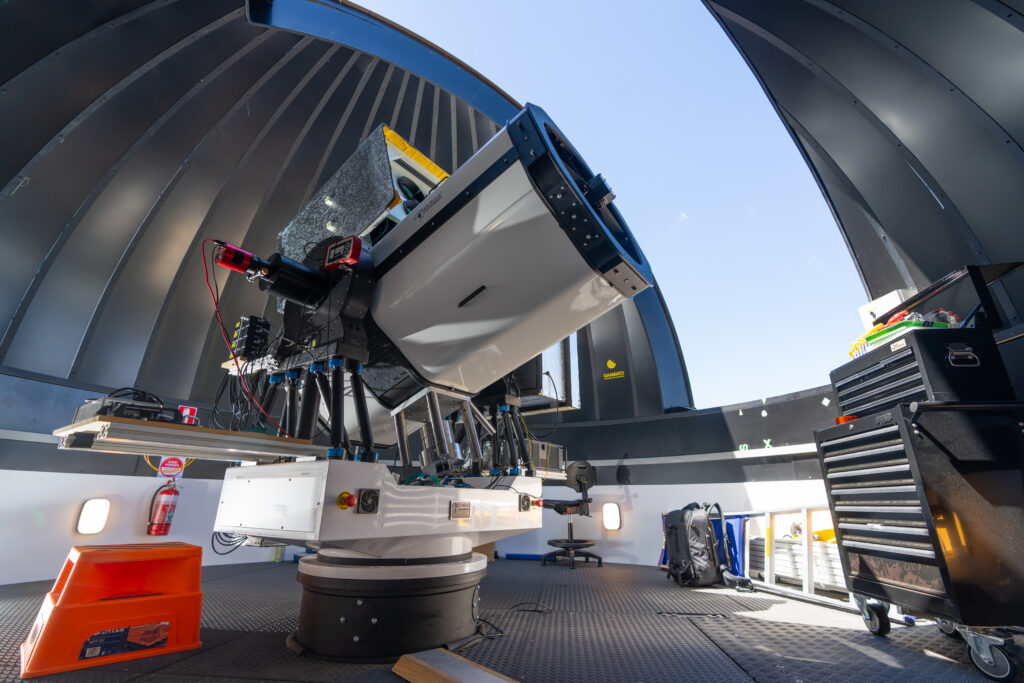
Observable Space was selected for the APFIT Deployable Attritable Optical (DAO) program to expand domestic production of high-performance optical telescopes for defense applications. This investment enables Observable Space to build on its space optics manufacturing heritage and full-stack software capabilities to equip the Space Force with low-cost, rapidly deployable satellite tracking capabilities.
“This APFIT award is significant for the sheer speed at which it allows the Department of War to operate,” said Mr. Jeremy Verbout, Assistant Secretary for Mission Capabilities. “The Department is acting on the urgent need for mobile, off-grid robotic telescopes with Observable Space’s Deployable, Attritable Optical Systems. These systems will provide the Joint Force with high-fidelity space domain awareness.”
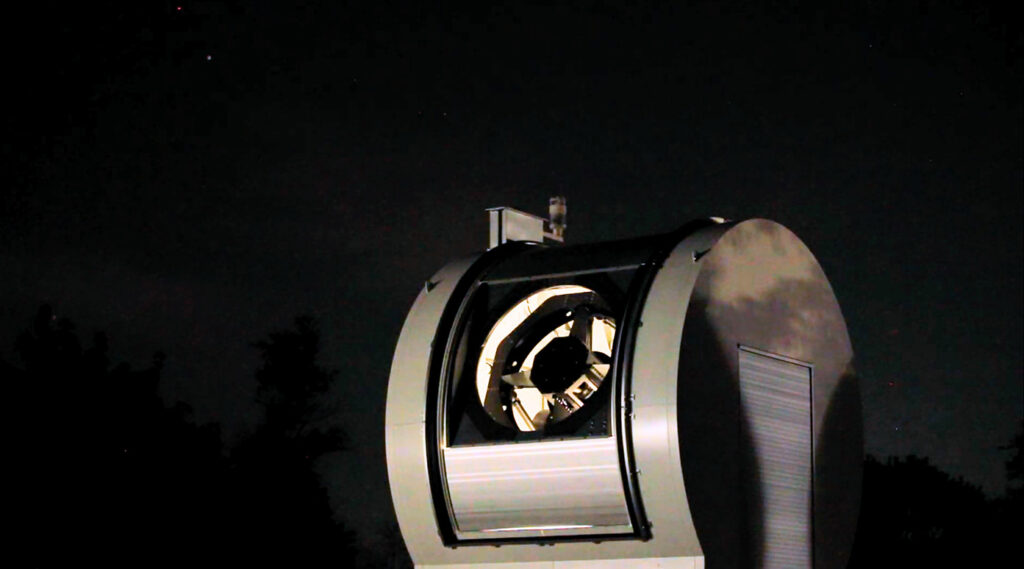
Observable Space has been awarded $22 million in initial task orders under the $94 million IDIQ to scale distributed optical infrastructure to support national security. The company’s Advanced Telescope Optics Mobility System (ATOMS) leverages its American-made commercial platforms to augment existing government Space Domain Awareness (SDA) systems, while improving resilience, affordability, and geographic coverage. The funds will accelerate product manufacturing scale-up and demonstrate ongoing operational demand for the company’s capabilities. The award represents the first step in a broader procurement pathway, with additional Space Force task orders and follow-on deployments anticipated in the near term.
See, Navigate, Communicate: The Race to Capture Light
Observable Space builds space technology spanning three core technology areas: high-throughput laser communications (lasercom) ground stations, advanced ground-based optical sensing systems, and in-space optical payloads. All three technologies are manufactured in-house at Observable Space facilities in Detroit and Los Angeles.
“If you control light, you control space,” Dan Roelker, co-founder and CEO of Observable Space, said. “The companies and nations that precisely track objects, navigate spacecraft, and communicate terabits per second will define the next era of the space economy. At Observable Space, we’re building the vertically integrated systems right now that makes this possible — from advanced ground-based tracking optics, to onboard space domain awareness payloads, to space-to-ground turnkey laser communications platforms.”
Turnkey Laser Communications Ground Stations
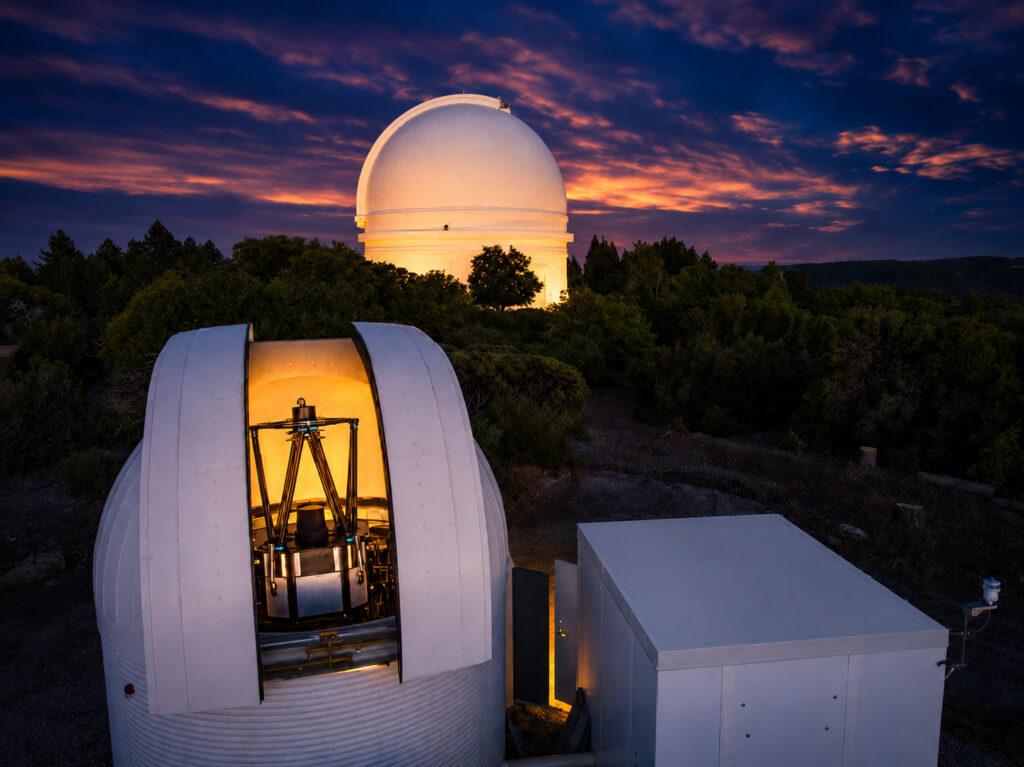
Laser communications is the holy grail of wireless space communications, orders of magnitude faster than radio frequency and becoming increasingly critical for new applications in the space economy, such as in-space data centers, next-generation communication constellations, and national security capabilities. For 15 years, Observable Space has built advanced, large aperture ground systems used in lasercom, from NASA’s historic Artemis II mission to the record-breaking TeraByte Infrared Delivery (TBIRD) demo to national security missions. Now, the company is expanding its lasercom partnerships and building a highly-optimized, low-cost, turnkey optical platform for new and existing laser communications customers.
“Observable Space is leading the race to capture light – to see, navigate, and communicate from space to ground,” said Shahin Farshchi, Partner at Lux Capital. “Fiber optics built the terrestrial internet; free-space optics will be the backbone of orbital infrastructure – from defense applications to the bandwidth AI compute demands. Observable has the full stack – manufacturing, lasers, systems, and software – to win this race.”
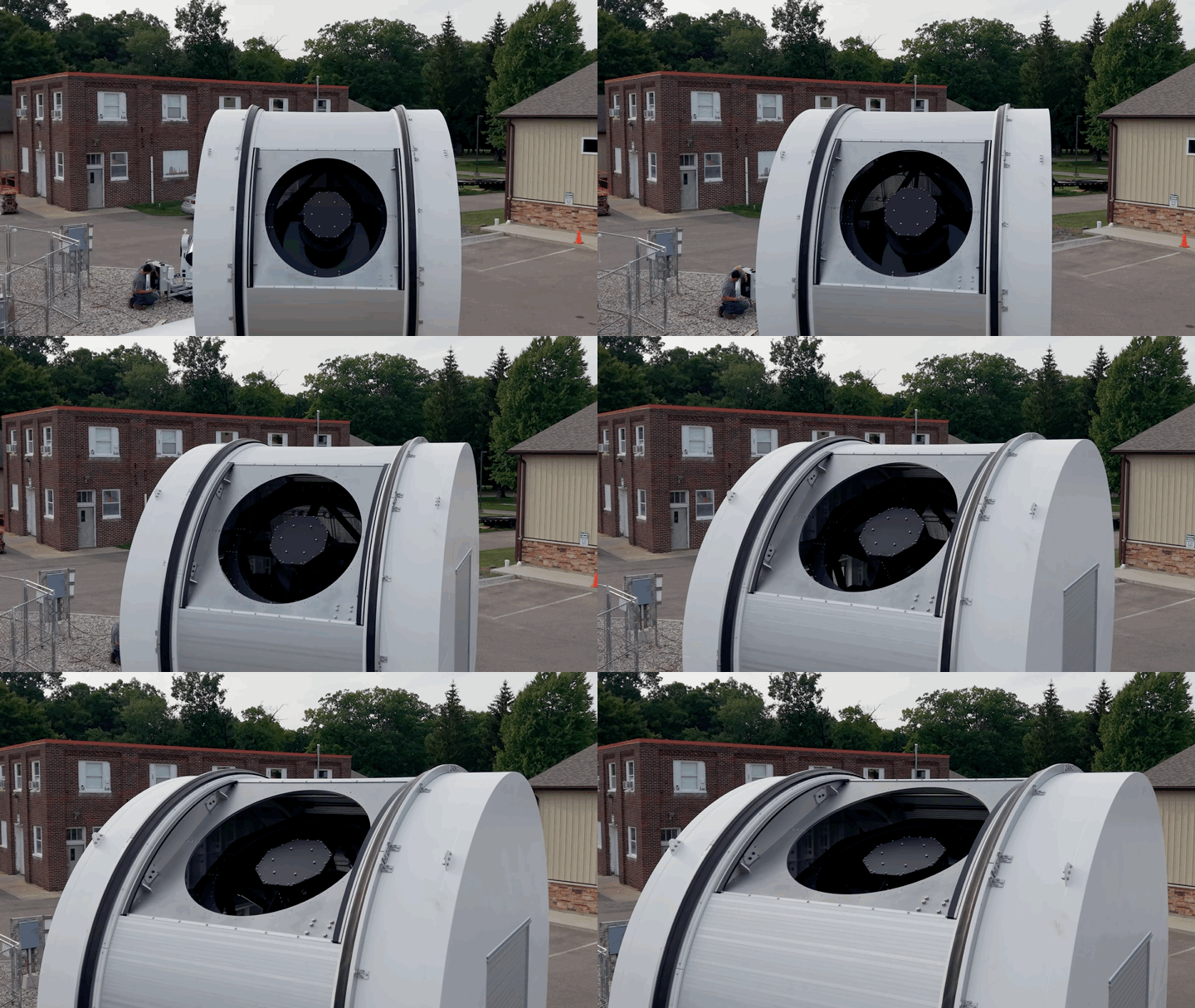
Featuring integrated transmitters, a large-aperture design, and a modular optics backend, the Observable Space lasercom technology enables rapid deployment. Powered by closed-loop tracking via real-time 4 kHz control loops and best-in-class fiber coupling via integrated adaptive optics, Observable Space ground stations support QPSK (quadrature phase shift keying) coherent and NRZ (non-return to zero) OOK (on-off keying) incoherent optical links, and are Space Development Agency (SDA) OCT 3.0+ compliant, 141.0B1 CCSDS & ESA ESTOL, and coherent 100G OpenZR+ ready.
On-Orbit Optics and Strategic Partnerships
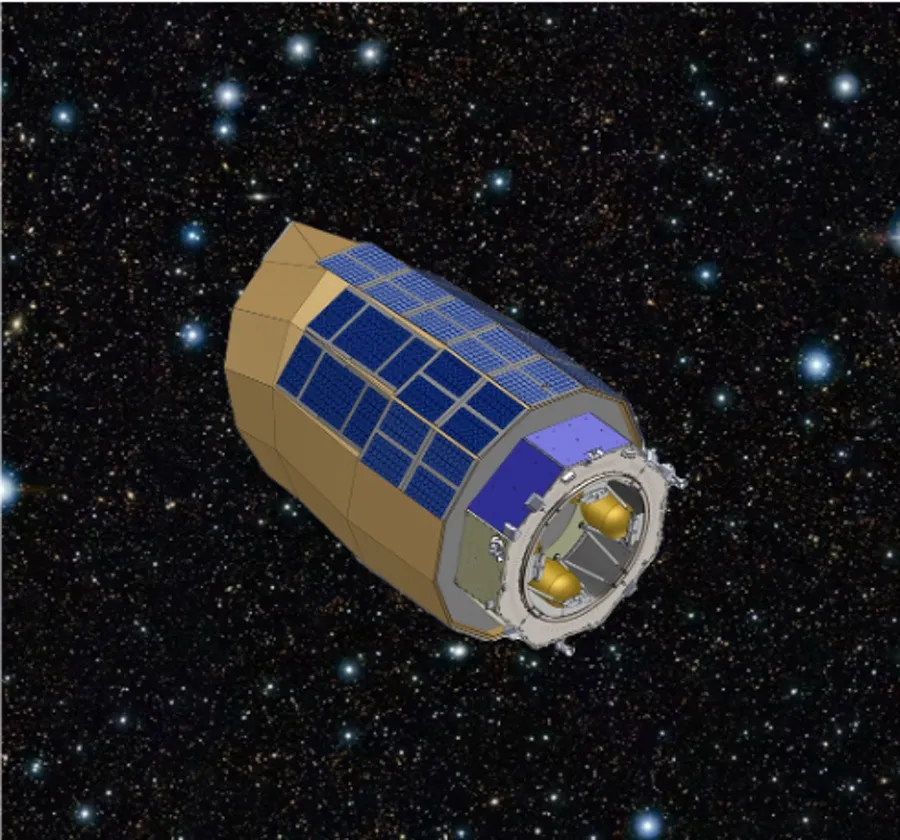
Observable Space is taking its optical manufacturing and compute expertise to space this year. A 200mm, 3-aperture multi-spectral in-space imager called Iguana is designed as a compact, easy to integrate payload with sensors and powerful edge processing avionics included. Meant to ease bus provider’s integration headaches, Iguana is a self-contained, off-the-shelf system with an 8-week lead time that can be used for on-orbit space domain awareness and rendezvous and proximity operations.
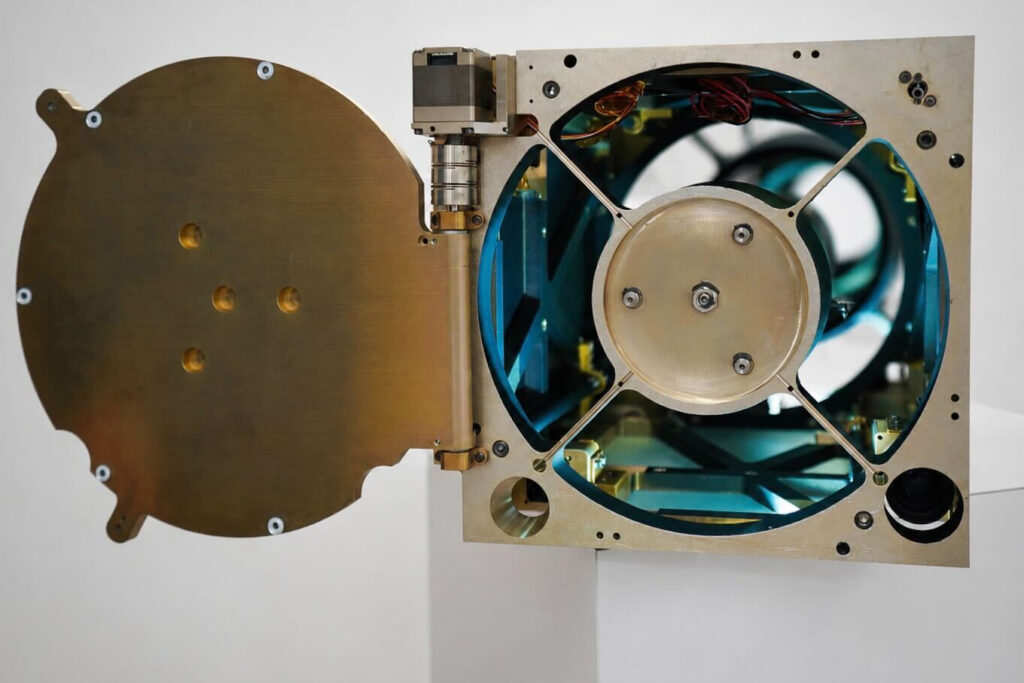
By combining these elements with unique onboard compute capabilities, Observable Space is able to produce world-class, off-the-shelf space observation systems that are more cost effective than what was previously available. The 200mm system is the first in the product line, with large aperture, multi-headed star trackers and a 500mm system planned for 2026, and larger systems up to 1.5 meters to follow.
“We look forward to supporting Observable Space’s first flight of their Iguana in-space imager later this year,” said Ian Cinnamon, Co-Founder & CEO of Apex. “This mission highlights how customers and partners can rapidly integrate their payloads on Apex’s productized satellite platforms to advance and demonstrate critical technologies in orbit.”
The company also maintains a strategic relationship with Raytheon, an RTX business, focused on advancing next‑generation optical systems for national security and scientific missions.
“Raytheon and Observable Space are working together on multiple cutting-edge space and ground optical systems,” said Paul Swanson, Director of Enabling Technology Programs at Raytheon. “Their manufacturing expertise, combined with our technical and mission experience, helps us deliver advanced sensing performance with greater speed, reliability and affordability for established and emerging mission needs.”
Space Domain Awareness Platform and Resolved Imagery
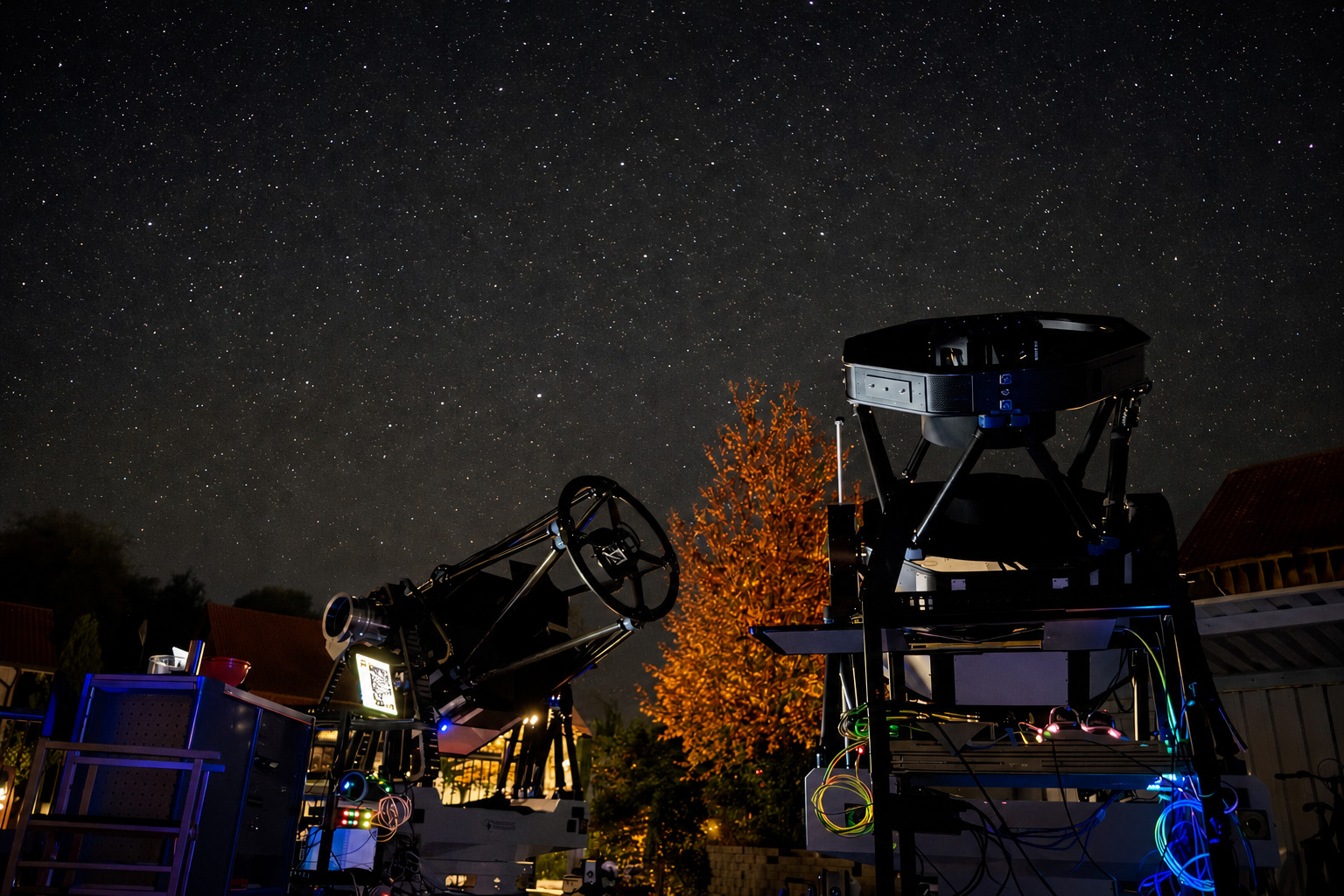
The Observable Space SDA platform is a globally distributed, real-time observation network of ground stations that collects data and performs analysis of objects in space.
Combining the power of more than 40 ground sites across the globe, the OS Platform can track targets on-demand with sub-arcsec precision in LEO, MEO, GEO, cis-lunar orbits, and beyond. The network consists of advanced observation systems that provide real-time data to satellite operators and government partners supporting launch, rendezvous and proximity operations (RPO), maneuverability, and station-keeping operations.
Since its inception, the OS Platform has executed 2.6 million automated tasks across live missions, identified 20 million+ targets to power real-time space situational awareness, and completed 84,000 hours of continuous orbital monitoring. This year, the platform will continue to grow with additional 1 to 1.8 meter class telescopes deployed globally, further enhancing resolved imagery capabilities for advanced pattern-of-life characterization.
New Consumer Products and International Expansion
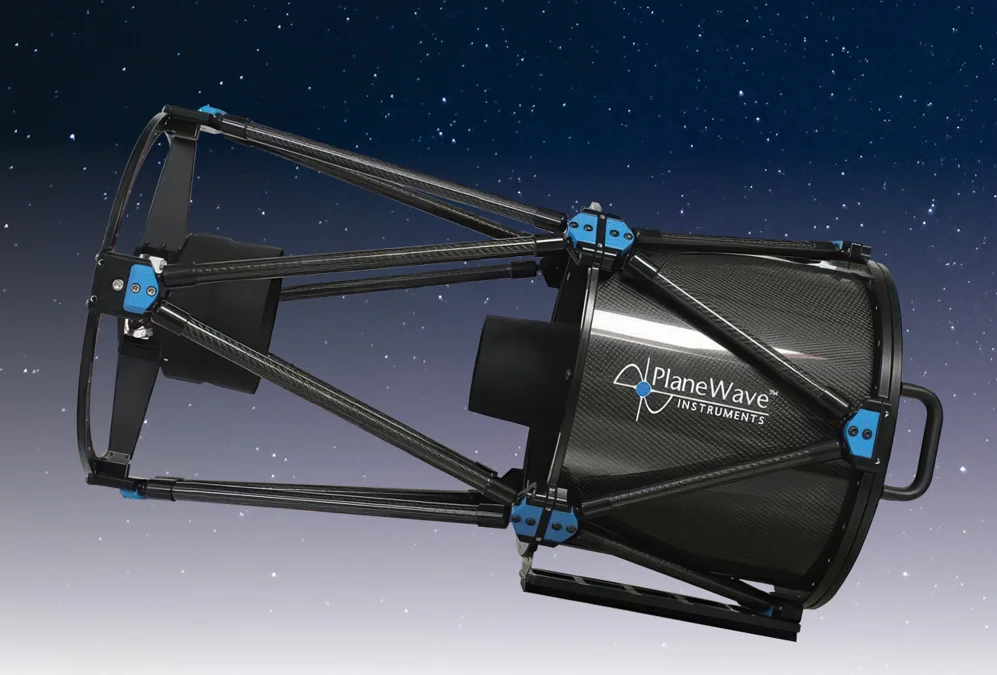
Observable Space is expanding its consumer telescope offerings, leveraging its optical engineering and manufacturing capabilities to deliver high-performance systems to advanced amateur astronomers, educational institutions, and research users. New consumer offerings include the Delta Rho 280, a recently launched telescope based on the Argus array optical design, and an 8-inch astrograph called the FSCT8. The DR280 and FSCT8 are compact, portable, ultra-fast imaging systems that bring professional-grade engineering to modern astrophotography, photometric surveys, and SDA applications.
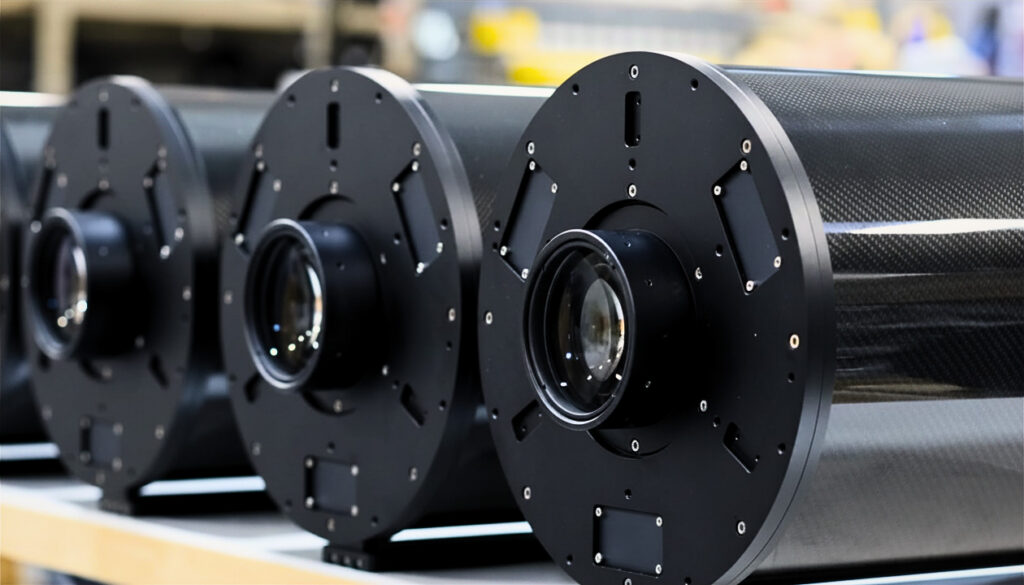
The company is also expanding into European markets through growing its strategic partnership with Baader Planetarium.
“Our longstanding partnership with Observable Space reflects a shared commitment to advancing high-performance optical systems,” said Johannes Baader, CEO, Baader Planetarium. “Together, we are expanding access to these capabilities across Europe and enabling new applications in both research and commercial markets.”
Expanding Manufacturing in Michigan
To support all of this growth, Observable Space is expanding its manufacturing footprint in Michigan, specifically by growing production capacity in downtown Detroit facilities supported by Detroit Venture Partners. This expansion supports domestic production of critical national security technologies while advancing workforce development and high-rate optical manufacturing in the United States.
“Observable Space is a perfect example of what Detroit does best — build things that matter,” said Dan Gilbert, Founder of Detroit Venture Partners. “They’re advancing space technology, creating high-quality jobs and further solidifying Detroit as a hub for advanced manufacturing and innovation. That’s the future we’re investing in.”
Observable Space will also participate in Detroit’s Reindustrialize Summit this June, where the company will join with the Space Force and DVP to highlight its approach to scaling advanced optical manufacturing and strengthening the U.S. industrial base.
About Observable Space
Observable Space is an LA-based space startup building the infrastructure to enable satellites and spacecraft to see, navigate and communicate. The vertically-integrated, full-stack company develops and builds advanced optical systems across laser communications, ground-based sensing, and in-space payloads. Co-founded in 2025 by former SpaceX exec Dan Roelker, Observable Space now employs more than 175 people across its manufacturing, engineering, spacecraft, and design labs. To learn more, visit observable.space. To join the team, visit observable.space/careers.
###