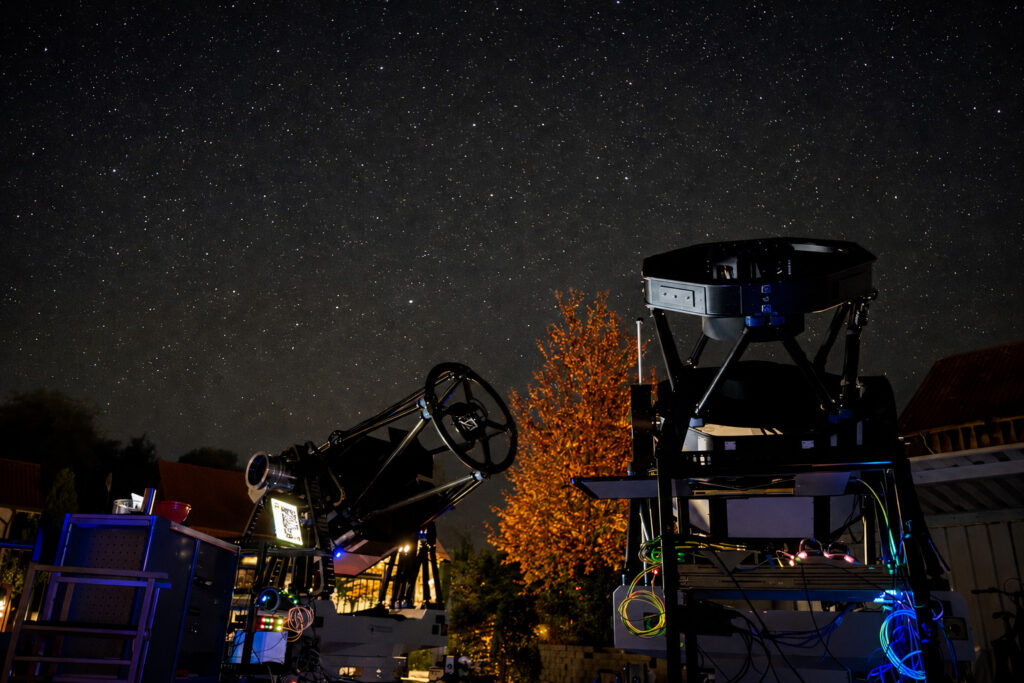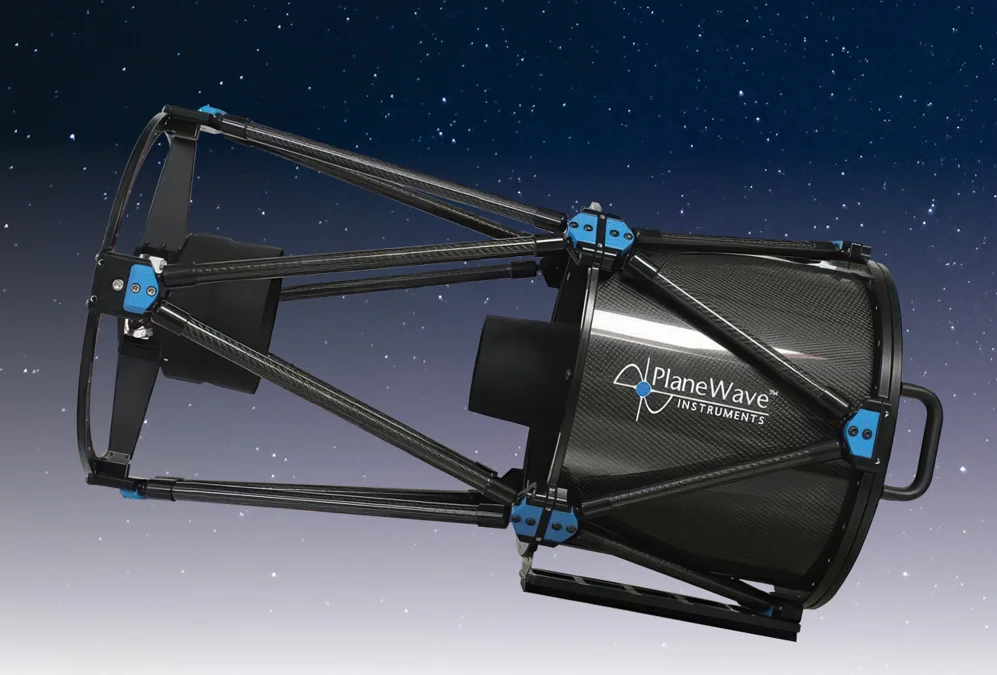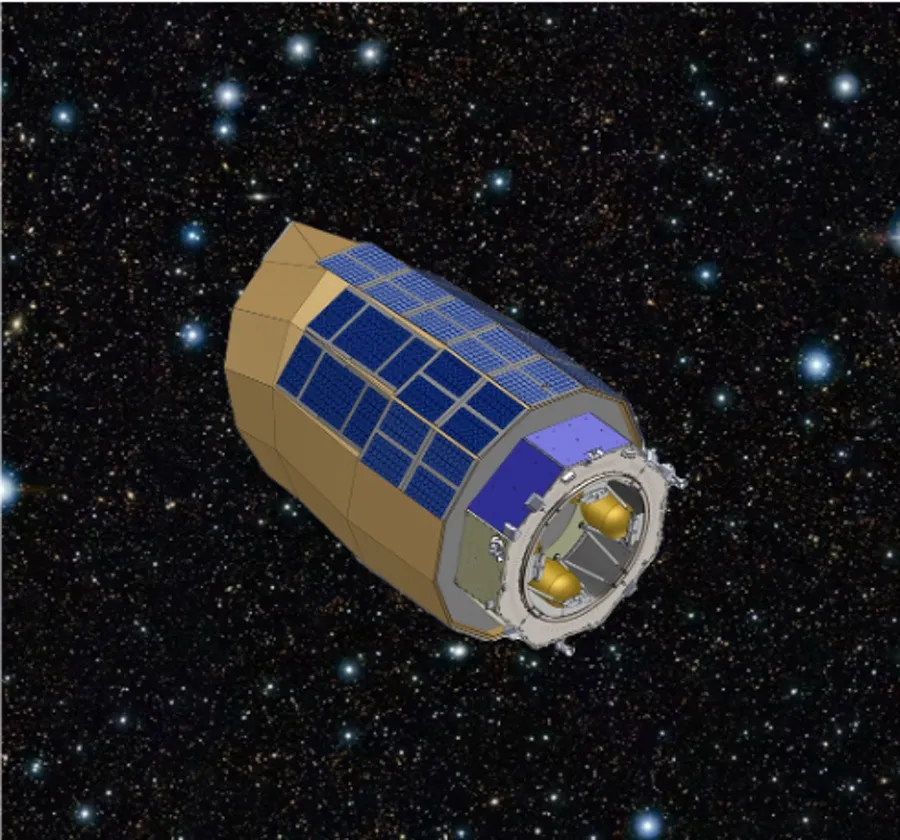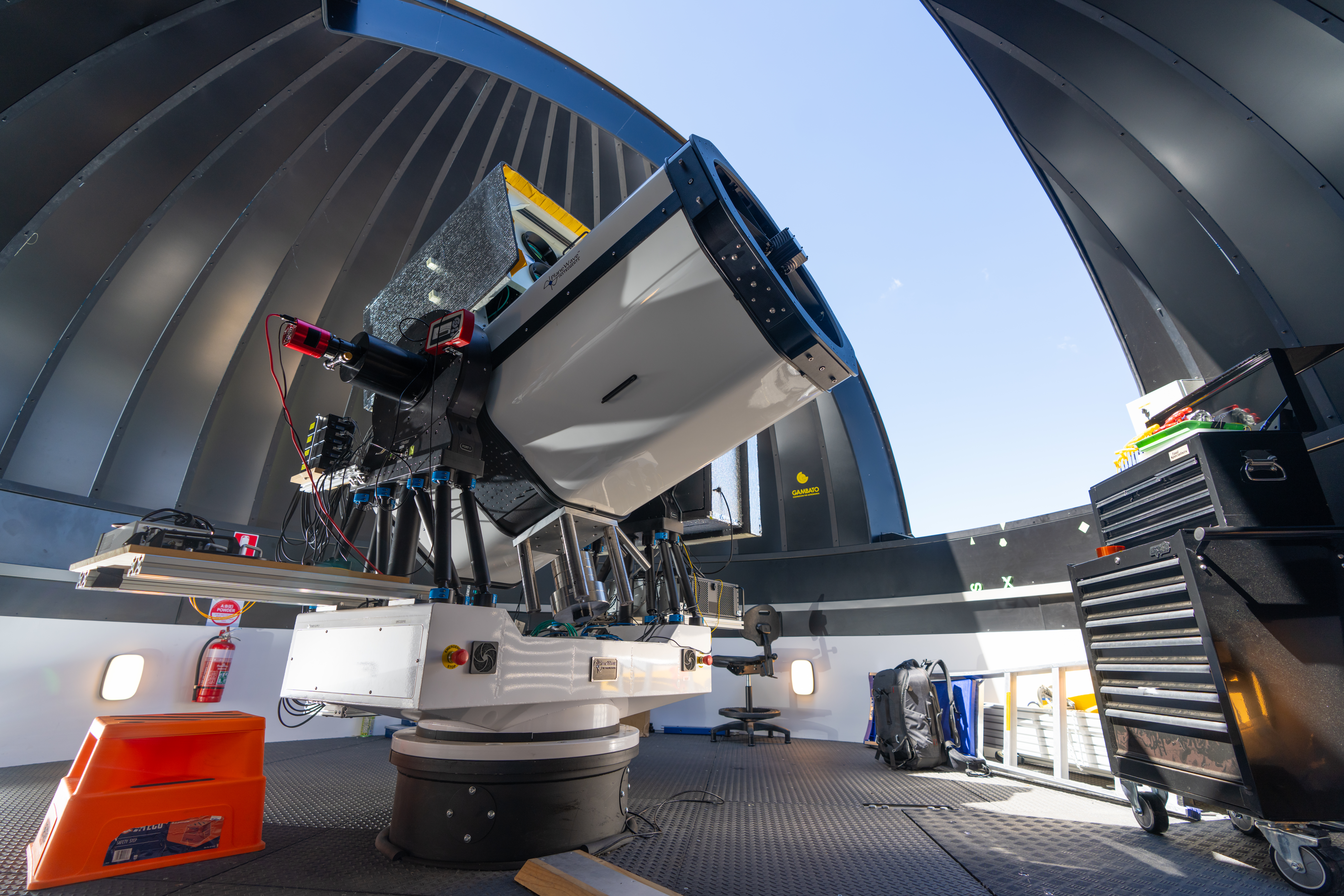
Quantum Optical Ground Station (QOGS) at Australia National University providing space-to-ground laser communications for Artemis II with Observable Space RC700 and Quantum Opus single-photon detector. Mount Stromlo Observatory, Canberra, ACT, Australia, March 11, 2026. Credit: Nic Vevers/ANU
News Story
/
Apr 22, 2026
Achieving HD Video for Artemis II with Space-to-Ground Lasers
Observable Space and Quantum Opus Ground Station Components Enable Artemis II Laser Link and High-Definition Lunar Broadcast
ADRIAN, Mich. — April 22, 2026 — Observable Space, a global leader in space optics and laser communications, and Quantum Opus, a world leader in superconducting photon detection, today announced their contributions to NASA’s Artemis II mission through low-cost, high-bandwidth optical communications that enabled high-definition video throughout the mission.
As the first crewed mission to utilize laser-based communication from the lunar vicinity, Artemis II downlinked a significant amount of data via the Orion Artemis II Optical Communications System (O2O). In addition to the prime O2O ground stations in California and New Mexico, NASA’s Glenn Research Center in Cleveland and Goddard Space Flight Center in Greenbelt, Maryland partnered with the Australian National University (ANU) to test a low-cost, off-the-shelf optical terminal at the Mount Stromlo Quantum Optical Ground Station (QOGS) in Canberra, Australia.
Leveraging Quantum Opus detectors and Observable Space lasercom optimized telescopes, QOGS successfully received live, high-definition video from Orion during all phases of the mission. Like the prime O2O sites, the ANU QOGS achieved the system-designed maximum data rate of 260 megabits per second, which is more than 5,000 times the data rate during Apollo 11. While only a fraction of that data rate was utilized during the Artemis II mission, this delivers a significant margin of capability for future deep space missions.
“Observable Space is proud to support the Artemis Program’s next-generation laser communications infrastructure,” said Dan Roelker, co-founder and CEO of Observable Space. “Advancing U.S. leadership in space- and ground-based optics is core to our mission, and turnkey laser communication ground stations are a critical component of that future.”
HD Video From Deep Space Lasers
For over 50 years, deep space missions have relied on Radio Frequency (RF) systems, which are increasingly restricted by spectrum congestion and data rate limitations. This mission demonstrated the benefits of Optical (Laser) Communications, which uses infrared light to carry data at rates over 100 times greater than traditional RF.
NASA’s space-side terminal was developed by MIT Lincoln Laboratory and CACI International, and the Quantum Opus and Observable Space partnership provided their components to the critical ground-side infrastructure at ANU. This demonstration proves that low-cost, off-the-shelf hardware can be employed for laser-based systems to handle the considerable telemetry and high-resolution imaging needs required for a permanent human presence on the Moon and missions to Mars.
Strategic Southern Hemisphere Coverage
A key highlight of the demonstration was the successful utilization of Southern Hemisphere optical links, filling in a large portion of the “blind spot” created by only using U.S. ground stations. As the Earth rotated away from primary U.S.-based ground stations, the ANU-QOGS, with key hardware components provided by Observable Space and Quantum Opus, was able to establish and maintain the high-speed connection. This global handover capability is vital for 24/7 mission safety and continuous data flow. This demonstration proves that numerous low-cost ground stations could be utilized in the future to achieve essential geographic-diversity and leverage favorable local weather conditions in real-time.
A Collector-Sensor Collaboration
The success of the downlink relied on a seamless connection of the two companies’ core technologies:
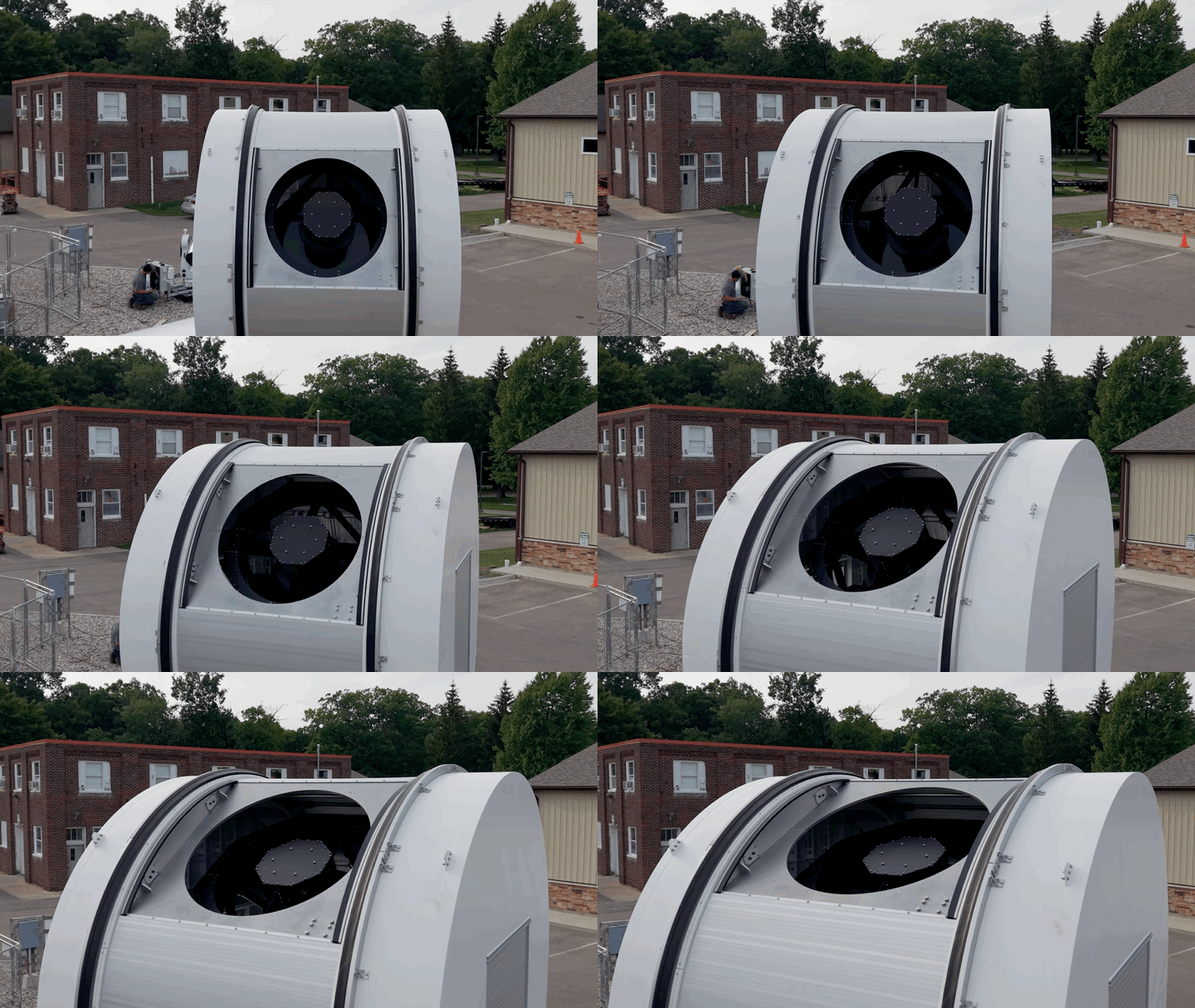
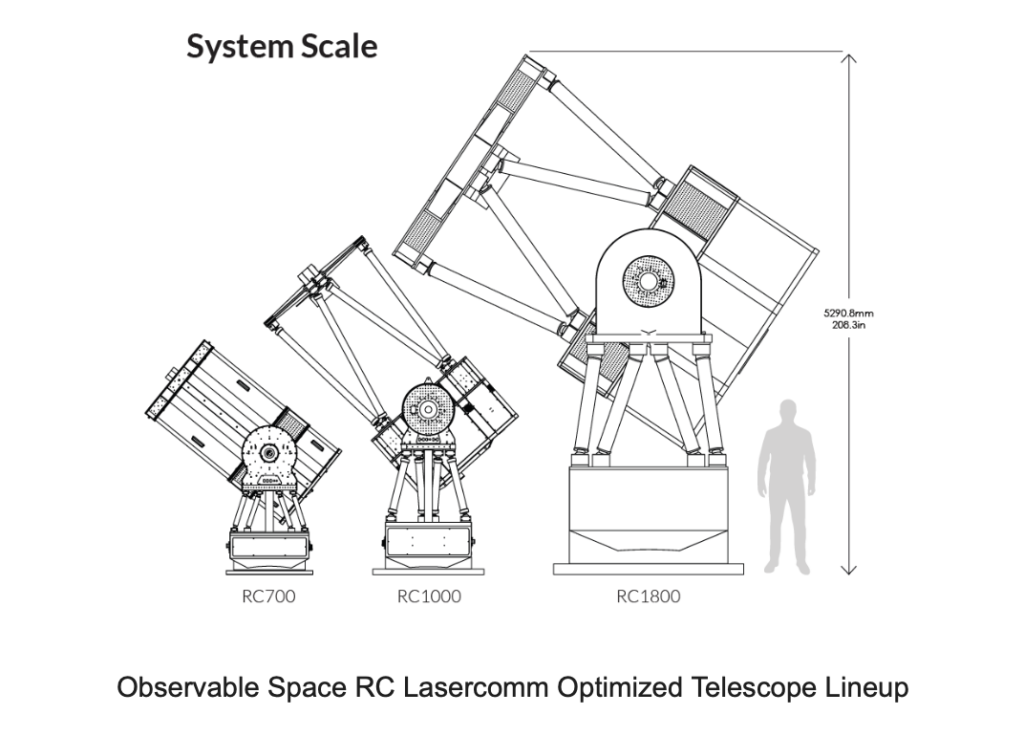
- The Collector: Observable Space’s RC700 Telescope: A turnkey advanced tracking system and large-aperture telescope locked onto Orion’s 1550 nm infrared laser signal from over 230,000 miles away, providing the stable optical platform needed to “catch” the data-laden laser pulses.
- The Sensors: Quantum Opus’ Opus One System: The telescope’s backend was integrated with the world’s most sensitive light sensors in Quantum Opus’ flagship Opus One detection system. Utilizing superconducting nanowire single-photon detectors (SNSPDs) cooled to near absolute zero, the Quantum Opus turnkey system captured photons with over 90% efficiency. The Opus One’s rapid recovery time was essential to providing a high-bandwidth, error-free downlink.
“The successful downlinking of data and streaming of live HD video from the spacecraft on Artemis II isn’t just a technical win — it’s the beginning of a new era of connectivity,” said former NASA astronaut and Quantum Opus co-founder, Dr. Josh Cassada. “The high-efficiency SNSPDs, with their world-class timing performance, were the key to processing these 1550 nm pulses for an incredible data stream from the lunar environment. We aren’t just receiving video; we’re building the first nodes of a space-based Quantum Internet.”
Toward a Quantum Internet
Beyond high-definition video, this demonstration serves as an early step toward a “Quantum Internet.” By proving the ability to detect individual photons across cislunar space with such high efficiency, Quantum Opus and Observable Space are laying the groundwork for future secure, quantum-encrypted communications between Earth, the Moon, and beyond.
“We’re excited to be part of such a historic mission. Combining ANU research strengths in control systems and optical instruments with finely tuned systems from Observable Space and Quantum Opus enabled us to demonstrate the capability of optical communications for lunar applications. We are at the dawn of a new era of space communications, supporting science and exploration in more detail than ever before,” said Professor Francis Bennet who led the development of the ANU QOGS.
About Observable Space
Observable Space is a vertically-integrated, full-stack space technology company developing advanced optical systems across laser communications, ground-based sensing, and in-space payloads. Its 57-acre manufacturing campus is in Adrian, MI and its spacecraft, engineering, and design labs are in Los Angeles.
For more info, visit observable.space.
About Quantum Opus
Quantum Opus, LLC is located in Plymouth, Michigan and is committed to the goal of providing novel products and services to enable researchers to make single-photon measurements with unmatched sensitivity, speed, and precision.
For more info, visit quantumopus.com.